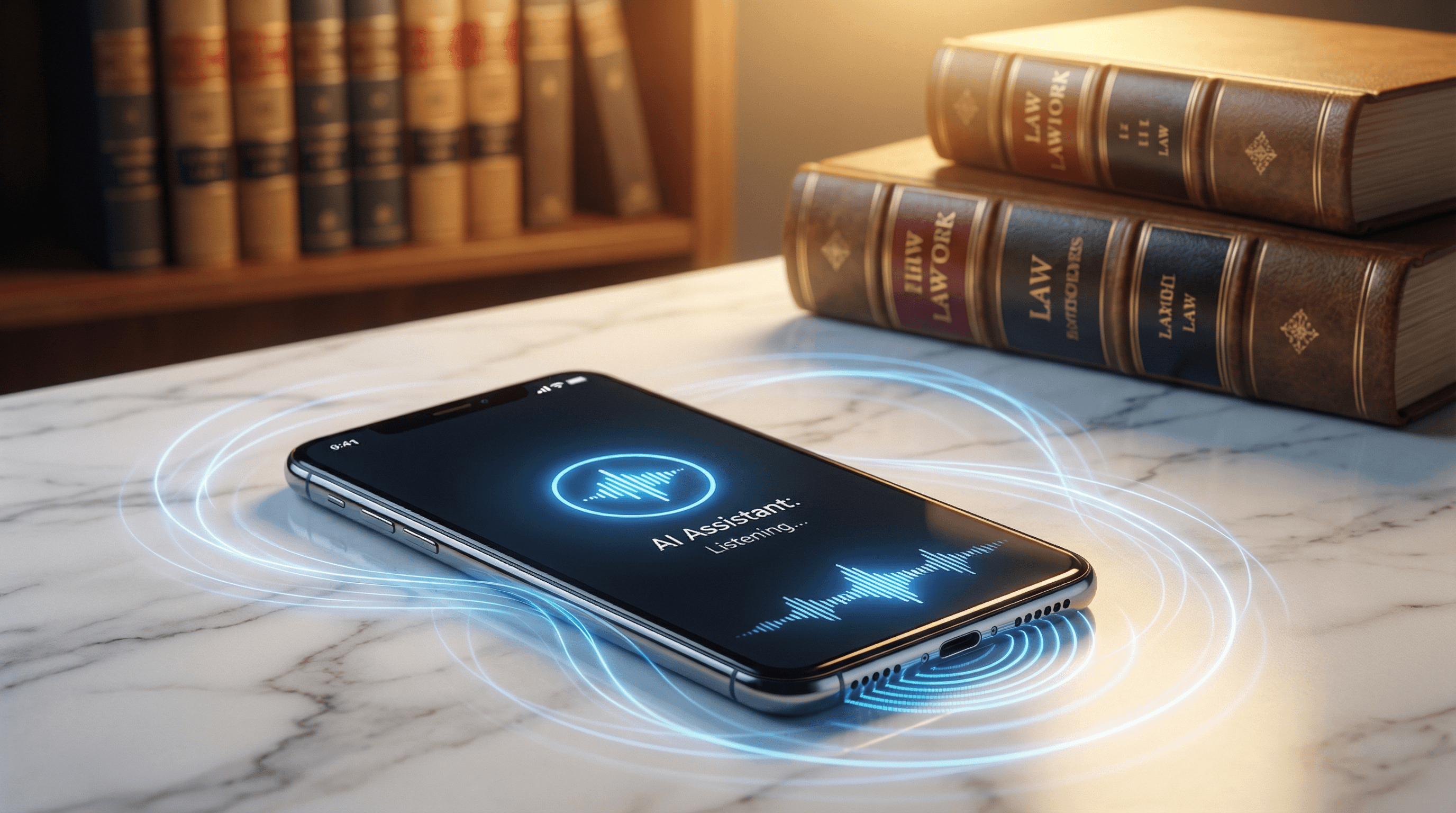
An AI Phone Assistant for Your Law Firm: Design the Handoff First
How to scope an AI phone assistant around routine questions, callback requests, and a tested handoff to your law firm’s team.

An AI phone assistant for your law firm | Chris Costa
Read the video transcript
What happens when someone calls your law firm and your team is already helping another client?
An AI phone assistant can be designed to answer routine questions, collect basic contact information, and help route the next step. That might be a callback request, an appointment request, or a handoff to your team.
The useful part is the setup: what it can say, what it should ask, and when a person needs to take over. We test those paths before putting it in front of callers.
It should support your intake process, not give legal advice or make promises about a case.
I'm Chris Costa. Let's map out the phone workflow that would actually help your firm.
Someone calls your firm while the team is on other calls. Another caller reaches you after hours. A third needs an answer to a routine question before deciding what to do next.
An AI phone assistant can be designed to help with these situations. The important work is deciding how it fits your intake process: what it can answer, what it should collect, where the information goes, and when a person takes over.
I approach a phone assistant as a defined part of the firm's workflow. Its job is to help the caller reach an appropriate next step and give your team usable information.
Choose a narrow first job
A first version could handle overflow calls, after-hours inquiries, or a limited set of routine questions. It might provide office hours and location information, collect a name and callback number, or record a brief reason for contacting the firm.
Appointment requests can be part of the design. Direct booking depends on the scheduling system and the rules you want applied. If a calendar connection has not been configured and tested, the assistant should take a request rather than promise a confirmed appointment.
The same distinction applies to transfers. A proposed live handoff becomes useful only after the destination, availability, and fallback have been tested. A diagram that says “transfer to staff” does not by itself create reliable coverage.
Write the conversation around the caller
Start with a greeting that identifies the firm and explains the assistant's role. Then keep the questions short. A caller requesting a callback should not need to work through an unnecessary interview.
A simple flow might be: identify the type of request, collect the minimum information needed, confirm the callback details, and explain what happens next. Different paths can handle existing clients, new inquiries, wrong numbers, and people who ask to speak with someone.
Approved answers should come from information the firm has checked. Office hours, service areas, and appointment instructions need an owner who keeps them current. When the assistant does not have an approved answer, it needs a useful fallback instead of an improvised response.
Define the boundaries before launch
The assistant should not evaluate a caller's case, provide legal advice, promise representation, or invent a response-time commitment. Those boundaries belong in the call design and the test plan.
Your firm also decides what information is appropriate to collect. We can begin with basic contact details and a short request rather than asking callers for sensitive facts they do not need to share at that stage. Access to transcripts, retention settings, and any recording or disclosure requirements should be reviewed for the firm's particular use before launch.
These are design questions to resolve together. A general demonstration is not a substitute for checking the rules and settings that apply to your practice.
Test the awkward calls, too
Testing should include more than a perfect caller reading a sample script. Try someone who interrupts, changes their callback number, asks an unexpected question, requests a person, or calls when the transfer destination is unavailable.
Check that the summary preserves the correct contact details. Confirm the notification arrives where intended. If a connected service fails, the system should follow a defined fallback rather than silently lose the request.
During an initial pilot, someone at the firm should review the experience and the resulting intake information. Useful measures include missing details, failed handoffs, duplicate requests, and whether staff can act on the summary. Those observations tell us what to adjust.
Make ownership and costs clear
Before building, we scope the phone setup, expected call volume, routing, approved information, integrations, and maintenance. Provider subscriptions and usage charges depend on the selected setup. I would confirm those details in a proposal rather than attach a one-size-fits-all price to an undefined workflow.
The firm needs a clear way to update its instructions and a way to reach a person when the assistant is not the right option. A useful phone assistant supports that human service.
Explore AI phone assistants for law firms, or describe the call situation you want to improve. If you are still deciding where AI belongs, the AI Assessment can help identify a sensible starting point.

Christopher Costa
Founder of Legal Search Marketing, helping law firms with websites and practical AI implementation.
Ready to Implement AI at Your Firm?
Schedule a discovery call to discuss how AI can transform your practice.
Schedule Discovery Call